

Obstructive hydrocephalus is a term usually used to denote non-communicating hydrocephalus.
It is actually a term that causes confusion as used in the above sense implies that communicating hydrocephalus does not have an obstruction to CSF flow/absorption; this is not true as the majority of cases of communicating hydrocephalus have obstruction to CSF flow through the subarachnoid space or impaired absorption at the arachnoid granulations.
For further discussion of this terminology, please refer to the most general article on hydrocephalus.
The remainder of this article pertains to the commonly used meaning of obstructive hydrocephalus, namely obstructive non-communicating hydrocephalus.
On this page:
Epidemiology
The demographics of affected patients will depend on the underlying causes, which include:
obstructing tumor or mass (e.g. tectal plate glioma, colloid cyst)
Clinical presentation
As is the case with most mass effect conditions affecting the brain, the presentation will vary dramatically depending on the speed of onset.
In acute obstructive hydrocephalus, as is the case with a colloid cyst obstructing the interventricular foramina (of Monro), a sudden increase in intraventricular pressure can lead to rapid loss of consciousness and even death.
In other patients where the obstruction is incomplete or gradual (e.g. aqueduct stenosis), there may be almost no symptoms despite massive dilatation of the ventricles.
Overall the presentation will depend on the presence of raised intracranial pressure that has the usual constellation of symptoms including headaches, made worse with stooping or straining, nausea, and vomiting. Papilledema may be evident 2.
In infants whose cranial sutures have yet to fuse, there can be a rapid enlargement of the head circumference 2.
Pathology
Etiology
-
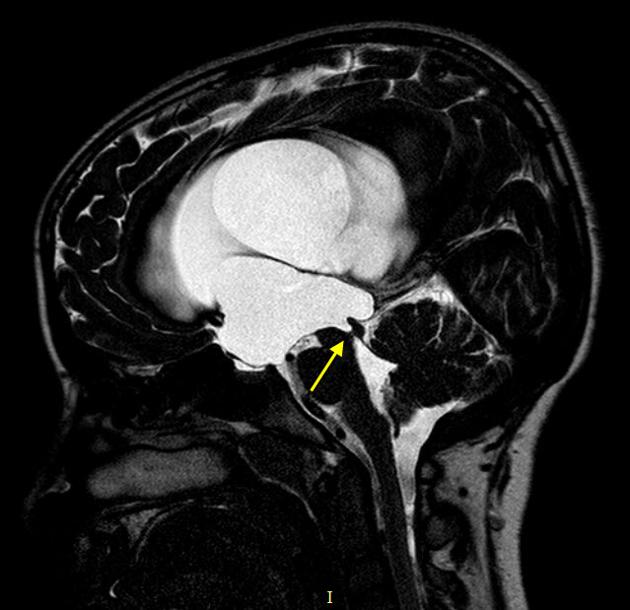
aqueductal web or diaphragm
-
intraventricular lesions
benign - colloid cyst
neoplastic - central neurocytoma, subependymal giant cell tumor, ependymoma
-
extrinsic lesions
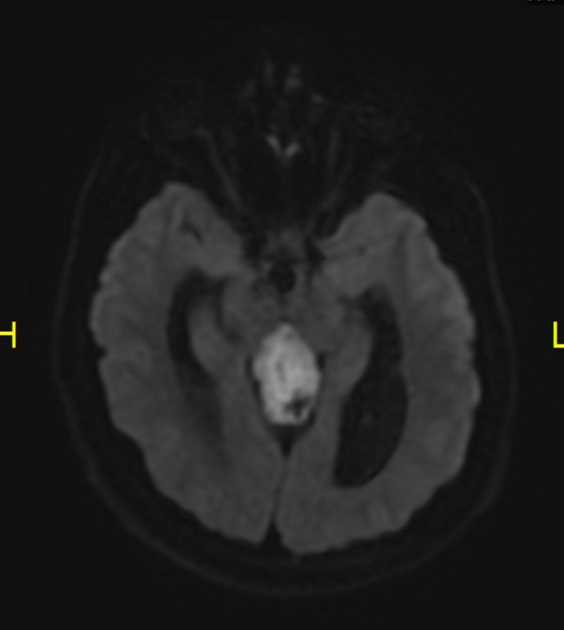
pineal masses occluding cerebral aqueduct
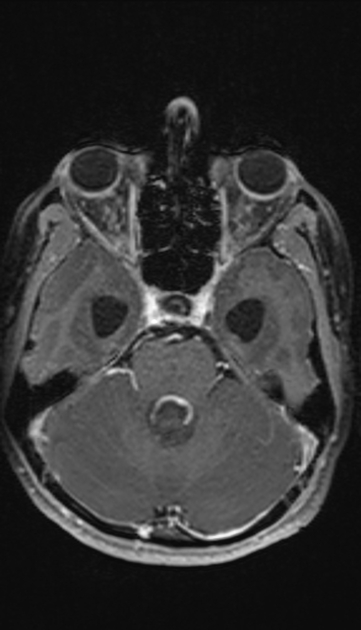
brainstem or cerebellar masses narrowing fourth ventricle outflow
ventricular adhesions - following surgery
Radiographic features
Both CT and MRI (and ultrasound in the neonatal period) can demonstrate most of the features, although the underlying cause may be better demonstrated with specific sequences (e.g. a web across the aqueduct causing aqueduct stenosis will only be visible on dedicated high-resolution MRI images).
Acute obstructive hydrocephalus
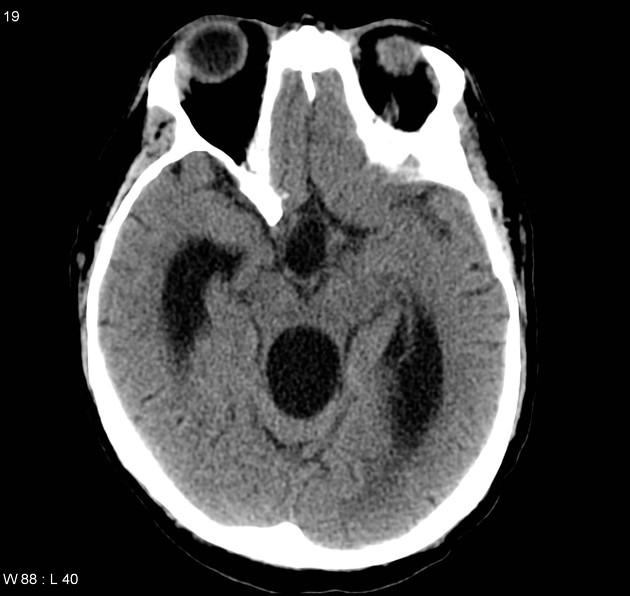
An important caveat to be aware of is that in acute obstructive hydrocephalus in young patients only minor ventriculomegaly may be visible despite the significant elevation of intracranial pressure. This can also be the case in patients who have had chronic CSF diversion (shunt, drain) with relatively brittle ventricular compliance.
If previous studies are available, they are probably the most reliable way of identifying early hydrocephalus. Features that are helpful in making the diagnosis of acute obstructive hydrocephalus include 3:
-
enlargement of the temporal horns (best indicator)
transependymal edema, or periventricular oozing, may be visible as high T2 signal on MRI or low-density change on CT around the margins of the ventricles
-
outward bowing of the lateral walls
inferior bowing of the floor
Chronic non-communicating obstructive hydrocephalus
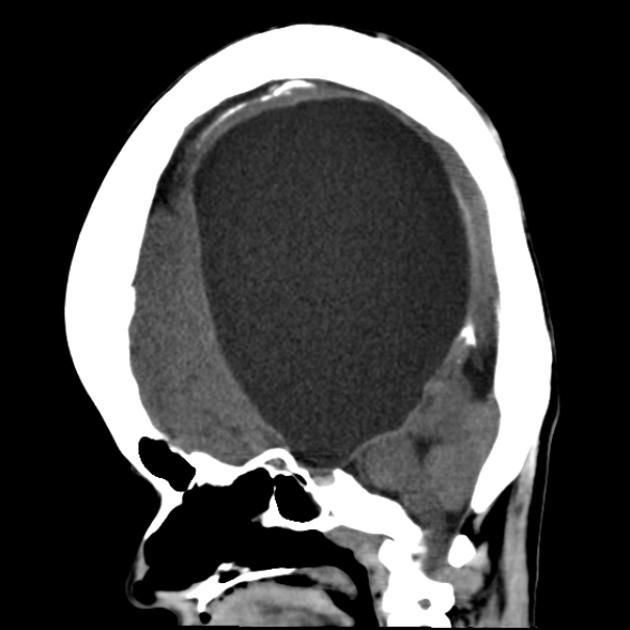
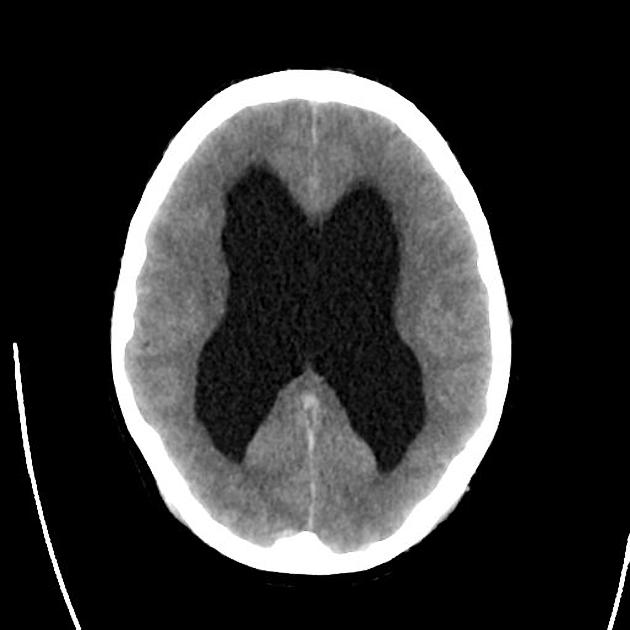
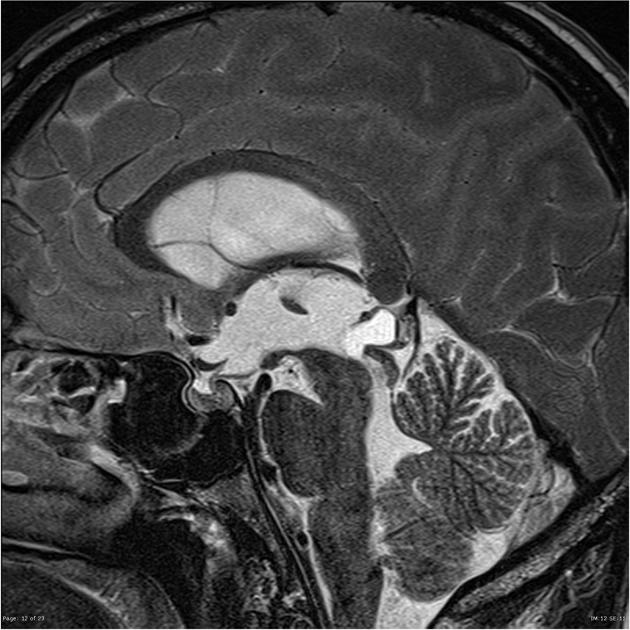
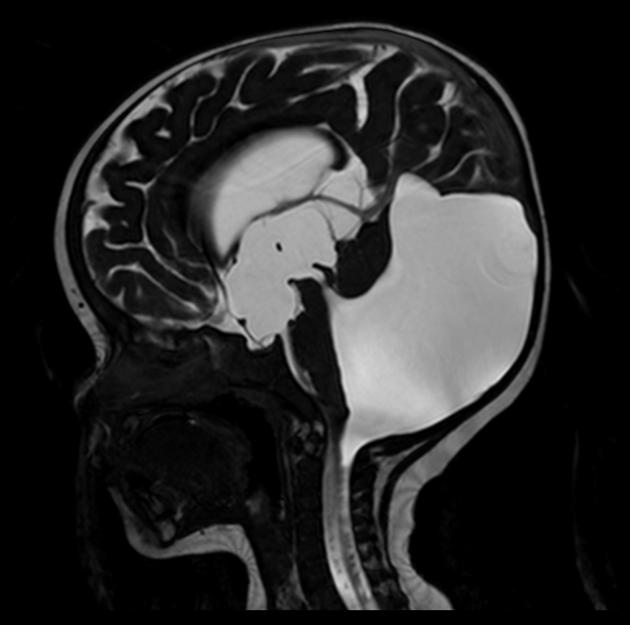
Non-communicating obstructive hydrocephalus (often merely referred to as obstructive hydrocephalus) is usually a relatively straightforward diagnosis to make on imaging. Over time, the portions of the ventricular system upstream from the obstruction gradually enlarge compressing and thinning the overlying cortex.
Features of long-standing non-communicating obstructive hydrocephalus (at the level of the cerebral aqueduct or below) include 1-3:
marked dilatation of the ventricles, especially the lateral and third ventricles
thinned and elevated corpus callosum
fenestration of the septum pellucidum
depression of the fornices
inferior displacement of the floor of the 3rd ventricle, abutting the skull base, obliterating the suprasellar cistern
outward bowing (ballooning) of the recesses of the third ventricle (infundibular, supraoptic, pineal, suprapineal recesses)
Treatment and prognosis
Treatment depends on the cause and location of the obstruction. In some patients with temporary obstruction (such as with subarachnoid hemorrhage), temporary CSF diversion is sufficient (e.g. via an external ventricular drain (EVD)). Similarly, if the cause is mechanical, it may be possible to resect the mass (e.g. colloid cyst).
In many cases, obstruction is permanent or unable to be directly treated (e.g. most tectal gliomas), and as such permanent CSF diversion may be required. Treatment options include:
shunting, most commonly with a VP shunt
third ventriculostomy is useful in patients with non-communicating obstructive hydrocephalus at or below the level of the cerebral aqueduct (of Sylvius)







 Unable to process the form. Check for errors and try again.